Lately, much of my conversation with a good friend and some colleagues has centred around the issue of effective questions. The two main sources that have triggered my exploration of proper questions and the act of proper questioning have been Julie Schell's, "How to Write Effective Questions to Evaluate Deep Learning", and John G. Miller's book, "QBQ! The Question Behind the Question".
Therefore, I've decided that tonight's Learn with Me chat will focus on effective questions and how they relate both to learning and to our own daily lives. I believe that Julie's wonderful focus on evaluating deep learning will connect well into John's thoughts on questions that facilitate personal accountability.
Join us tonight at 8pm EST for an engaging, fun and interactive Learn with Me Twitter chat that as always, will include visuals to deepen the experience. Use the #learnwme hashtag and TwitterChat.com and we'll see you tonight!
Update: Here is the Storify link of the transcript with the sketches I created to visual the concepts we touched on. Enjoy!
Showing posts with label classroom. Show all posts
Showing posts with label classroom. Show all posts
Monday, January 28, 2013

Thursday, December 13, 2012
We're ALL Visual Learners
If you're reading this sentence, you're a visual learner. To get to my blog, use your mouse, swipe your screen or click on the link I tweeted out, you have used the visual processing aspect of your brain. Just like you do to walk from your bed to the bathroom in the morning and pick up your toothbrush instead of a hair brush when you need to brush your teeth.
Almost two weeks ago I went to a talk by Dan Roam at the Rotman school here in Toronto and have been on a completely new mental direction ever since. Dan's book, 'Blah Blah Blah: What to do when words don't work', has been so affirming. It has set my creative imagination on fire and has prevented me from sleeping at a decent hour as my idea generator has been working overtime.
.JPG)
As Dan has stated in a number of fantastic podcast interviews (Boxes and Arrows, Mastermind Podcast, etc.), we have purposefully trained our brains to ignore the visual part of it that makes life so wonderful and meaningful. The linear and the verbal rule the world today. As he has said, we aren't electing Prime Ministers and Presidents based on their drawing skills, but rather their ability to talk. Contrast this present reality with another: the incredible growth of applications like Instagram and other platforms -Twitter and LinkedIn- updating their UI's to be more visually oriented.
Let me quote Dan here for a minute and target this passage to all those linear-focused business folk out there:
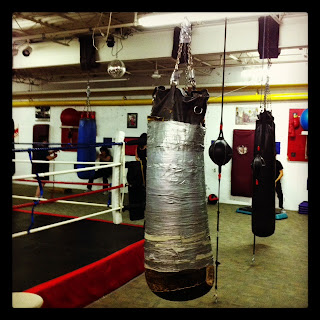
So, let's try an experiment. Take a gander at some of my recent Instragram photos:





Almost two weeks ago I went to a talk by Dan Roam at the Rotman school here in Toronto and have been on a completely new mental direction ever since. Dan's book, 'Blah Blah Blah: What to do when words don't work', has been so affirming. It has set my creative imagination on fire and has prevented me from sleeping at a decent hour as my idea generator has been working overtime.
.JPG)
As Dan has stated in a number of fantastic podcast interviews (Boxes and Arrows, Mastermind Podcast, etc.), we have purposefully trained our brains to ignore the visual part of it that makes life so wonderful and meaningful. The linear and the verbal rule the world today. As he has said, we aren't electing Prime Ministers and Presidents based on their drawing skills, but rather their ability to talk. Contrast this present reality with another: the incredible growth of applications like Instagram and other platforms -Twitter and LinkedIn- updating their UI's to be more visually oriented.
Let me quote Dan here for a minute and target this passage to all those linear-focused business folk out there:
"The biggest buzzword in business these days is innovation. The business press, business leaders, and business schools can't say it enough: 'Innovation is the key to success.'...
When we're searching for innovation, aren't we simply seeking a different way of looking at the world? ...Why is it that at the moment in history when we most need to see the world differently, we don't force our mind to look at problems differently? If our goal is to look differently, where have all our pictures gone?"Good question.
So, let's try an experiment. Take a gander at some of my recent Instragram photos:


Now, what did you just learn about me?
Monday, November 26, 2012
#learnwme chat: Twitter in the Classroom -Nov. 26, 2012
Increasingly, there have been cases in the media reporting and debating on the use of Twitter (and other digital tools) in the classroom. Some instructors and facilitators embrace it, others ban it.
Tonight's #learnwme chat will focus on the use of Twitter in the classroom, workshop and training session. We'll discuss best practices, what to avoid and what some creative uses could be. Check my previous post on the latter.
Your input and ideas will be most welcome and invaluable. Please join us at 8pm EST, Monday November 26, 2012 and Learn with Me!
Update: Last night's chat was great! Good tips and ideas to be found in the Storify transcript. Check it out and thanks for reading!
Tonight's #learnwme chat will focus on the use of Twitter in the classroom, workshop and training session. We'll discuss best practices, what to avoid and what some creative uses could be. Check my previous post on the latter.
Your input and ideas will be most welcome and invaluable. Please join us at 8pm EST, Monday November 26, 2012 and Learn with Me!
Update: Last night's chat was great! Good tips and ideas to be found in the Storify transcript. Check it out and thanks for reading!
Thursday, November 22, 2012
Student Snitching: No Laptops During Class
A few weeks ago, the Toronto Star published an article about Professor Henry Kim at York University's Schulich School of Business. The focus of the article was on Kim's approach to students using laptops while in his classes. To ensure 'proper' use of their laptops, Kim has created two pledges the students must agree to:
1 - No laptop use for anything other than class work.
2 - Spy on their classmates' screens and report truthfully on what they see.
Now, I'm not sure what your first reaction is to reading those two pledges, but mine wasn't positive. (Before I go further, I'd like to point out that the comments posted by readers are quite an interesting read, too.) My first thought was, 'He doesn't get it'. Then I read on to see what his reasoning would be for his classroom rules:
Kicking students out of your classroom for looking at something deemed 'improper' on their laptop screen seems to me counter-productive. I consider that Kim could instead be more engaging himself. Maybe he could use some creativity and have the students actively use Facebook, email, Twitter and Pinterest to expand their learning experience with digital tools they've come to love.
Could there be one class online, one class offline? Would it work better if the first 45 minutes of the class occur with laptops closed and students knowing that they can open and use laptops productively for the following 60 minutes of class time? I'm thinking there has to be better solutions than spying, snitching and expulsion from the lecture hall.
Prof Kim rightly asserts:
1 - No laptop use for anything other than class work.
2 - Spy on their classmates' screens and report truthfully on what they see.
Now, I'm not sure what your first reaction is to reading those two pledges, but mine wasn't positive. (Before I go further, I'd like to point out that the comments posted by readers are quite an interesting read, too.) My first thought was, 'He doesn't get it'. Then I read on to see what his reasoning would be for his classroom rules:
By recruiting this new breed of screen snitches, Kim hopes to make digital distraction so socially awkward that students will close forbidden windows — Facebook, email, Sikh field hockey matches — and plug into class.So again I react, "Why is Facebook 'forbidden'"? I wonder what the reasons behind students tuning out and watching sports matches are? Does Prof Kim need to focus more on what he's doing -or not doing- rather than what his students are doing, or should be doing?
Kicking students out of your classroom for looking at something deemed 'improper' on their laptop screen seems to me counter-productive. I consider that Kim could instead be more engaging himself. Maybe he could use some creativity and have the students actively use Facebook, email, Twitter and Pinterest to expand their learning experience with digital tools they've come to love.
Could there be one class online, one class offline? Would it work better if the first 45 minutes of the class occur with laptops closed and students knowing that they can open and use laptops productively for the following 60 minutes of class time? I'm thinking there has to be better solutions than spying, snitching and expulsion from the lecture hall.
Prof Kim rightly asserts:
There’s not an ounce of scientific evidence that students can actually multi-task and learn.I personally do not feel, however, that the issue here is of multi-tasking and whether it inhibits learning or not. I believe we cannot fight the digital wave that is crashing down upon us daily nor do it in a way that is not going to turn many away from learning. There are ways to integrate digital technology into classrooms successfully, so let's find those ways, create new ones and keep the learners in their seats -engaged, excited and passionate. If we don't, then more comments like 'steboy' will be made:
Saying we should sit straight and pay attention but not take the care to find out if we're going to want to be there is double talk. This issue seems personal to you, are you a bad teacher? Because I pay attention to the good ones.Let me know your take on this article and Prof Kim's approach in the comments below.
Thursday, October 11, 2012
Twitter: In the Classroom
On Monday, June 13, 2011, I came across a video on YouTube that basically became my first step into an amazing journey. The video, "The Twitter Experiment - Twitter in the classroom", shows how Dr. Rankin, professor of History at UT Dallas, uses Twitter to great effect with her students.
I remember when I first watched this, sitting in my desk chair in amazement. I marvelled at her creativity, ingenuity and ability to engage her students with the content in a way they enjoyed and enhanced their learning and retention. Brilliant.
Since then, I've been researching, planning and developing ways in which Social Media platforms like Twitter and increasingly ubiquitous devices like the iPhone can create amazing learning opportunities for adults.
So, come and join me on this incredibly exciting journey! Take a look at where I took my first step....
I remember when I first watched this, sitting in my desk chair in amazement. I marvelled at her creativity, ingenuity and ability to engage her students with the content in a way they enjoyed and enhanced their learning and retention. Brilliant.
Since then, I've been researching, planning and developing ways in which Social Media platforms like Twitter and increasingly ubiquitous devices like the iPhone can create amazing learning opportunities for adults.
So, come and join me on this incredibly exciting journey! Take a look at where I took my first step....
Subscribe to:
Posts (Atom)